Initial Funding:
- 1,000 shares
- $10/share
- Total value = $10,000
GRAT Term: 2 years
7520 Hurdle Rate: 5%
Annuity Structure: Zeroed‑out GRAT (remainder ≈ $0 for gift‑tax purposes)
Payment Method: In‑kind stock only
No stock sales inside GRAT
Calculate Required Annuity Payments Back to Grantor
A 2‑year zeroed‑out GRAT with a 5% hurdle rate requires annuity payments that return the present value of $10,000.
The math:
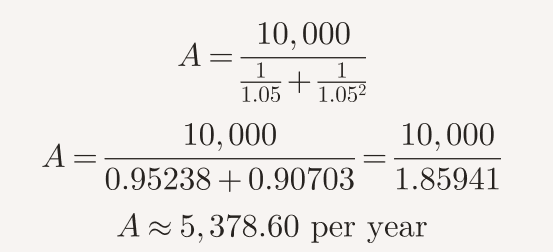
So the GRAT must pay you:
Year 2 annuity: $5,378.60
Year 1 annuity: $5,378.60
Assume Stock Appreciates
Let’s assume:
End of Year 2 price = $30/share
End of Year 1 price = $20/share
GRAT Pays Annuities in Shares
Year 1 Payment:
Stock price = $20/share
GRAT owes you = $5,378.60
Annuity at end of year 1 = 5378.60/20 ~= 269 shares.
After Year 1:
- Shares contributed: 1,000
- Shares returned to you: 269
- Shares remaining in GRAT: 731
Year 2 Payment:
Stock price = $30/share
GRAT owes you = $5,378.60
5378.60 / 30 ~= 179 shares
After Year 2:
- Shares remaining before payment: 731
- Shares returned to you: 179
- Shares left in GRAT: 552 shares
Value of Remainder to Beneficiary
Beneficiary receives all remainder value, in stock or cash, tax-free.
What happens to voting right of the stock?
Grantor can be the voting trustee of GRAT and beneficiary trust, but grantor cannot benefit financially from beneficiary trust.

